Wednesday, 21 August 2013

As the technology progresses, everything is becoming more and more portable, and more mobile. Almost every gadget or machine is getting smaller lighter and smarter as the days are passing. Let's start with the invention of the computer, when the first proper computer was invented, it was almost of the size of a room. But, afterwards, the technology regarding the computer started getting more and more advance and huge changes were made in the design structure and functions. The computer which we see today is completely transformed; it is equipped with all the necessary tools that are required to perform numerous operations.  Similar case is with the mobile phone. When Motorola first introduced the cell phone, it was too big to keep it in the pocket and was quite heavy. There were no functions in that cell phone except calling and answering the call. All in all it was just a portable landline phone that even had a battery backup of only half an hour. But, researchers kept on working, they tried new ideas and they got successful at every new stage of revolution of the cell phone. Then, the mobile phone was given the features of SMS (Short Messaging Service) that made the communication even easier. The developers add to the facility to play games on cell phones that are proven to be a good time pass.
After these inclusions, a journey of revolution of mobile phone started that made these cellular phones radios, camera, camcorder and many other gadgets. Steve Jobs gave these cell phones a totally new look by introducing a touch screen feature in the mobile phones. After that invention, companies started competing in a race of launching the best Smartphone and this race is still in progress. However, the major competitor of this race is just two i.e. Apple and Samsung. There is no doubt that the technology of cellular phones will continue to be advanced and will become better day by day. From the day computer has invented and being used to perform tasks, there is a rapid progress in the technology of storing data. A number of devices invented to store data digitally, many of them got successful and many of them lost somewhere due to the incapability. The scientist had a clear view that at some point in the future, the computer users would like to carry their data with them. That is why, along with the regular data storing devices, scientists invented devices like Floppy Disk and CD to make the data mobile. Making data portable given a great facility to the users, but it imposed a big threat to data security.technology-overload2
Portable data storing devices such as CDs, DVDs, memory cards and the more popular USB flash drives. As these portable drives are small and light which make them mobile and make them handy, these qualities are also the biggest drawback of these drives. The portable drives are prone to getting lost or stolen, using a software that can Secure USB and other portable drives would be a good idea to make your data secure. Where technology advancement brings a number of facilities, the same advancements always have some big drawbacks.
For More Information visit:                                           

Monday, 19 August 2013

7 Things You Need to Know about the New Toyota Supra

Posted by Tom Riddle | 23:02 Categories:
As any gearhead would tell you, the Toyota Supra is a proper 90s hero car. Production ran for nearly 24 years, but it wasn’t until the Mark IV arrived in 1992, that the Supra cemented its place in history as the lovable, tunable, affordable sportscar king of the mid-90s.
Unfortunately- after a successful ten-year run- production ended with the Mark IV in 2002, leaving the Toyota lineup to sulk in its own facade of beige nothingness. The Camry, the Corolla, and of course, the Prius, sell well and meet the automaker’s “Global Vision” program, but don’t do much to inspire.
But now, there’s hope. President and CEO Akio Toyoda (a former racing driver), brings a fresh face to a brand that had seemed to have lost its “fun” perception of the 80s and 90s. With cars like the GT 86, it’s the first step in the right direction, and a new sportscarwhich many have pegged as the successor to the Supra is in the works.
What it will officially entail has yet to be determined. But based on previous reports, rumors, and a little bit of research- we pulled together 7 things that you need to know regarding the upcoming new Supra, and an exclusive rendering done up our friends at Hansen Art:
Toyota Supra Concept
It might not actually be called “Supra”
And that’s going to be rather disheartening for a lot of people to hear. As the Gen-Y car-buying market begins to bloom, many are looking for familiar nameplates. It brings back a sense of nostalgia, a sense of what was once great. As of now, Toyota tells us that the Supra moniker is only but a “candidate” in a long list of possible names for the new sportscar.
It’s going to be hybrid
Strike two, for many Supra faithful. The 2JZ (twin-turbo, inline-six) engine was well-loved for its ability to churn out massive amounts of aftermarket power. But as with many hybrid powertrains we see today, many shops tend to stay out of harms way, as working on such a vehicle gets overly complicated and expensive.
Emission standards are hitting automakers hard, and as Toyota sits at the forefront of hybrid research, we don’t doubt the Supra will be the automaker’s next pet project in a line of high-performance, fuel-efficienct sportscars.
It’s going to be powerful
Finally, some good news. Yes, it’s going to be about as powerful as many of the other competing supercars hitting the market at the time (GT-R, R8, Evo XI, etc.). 500-hp, or more, is predicted to come from under the hood.
Toyota Supra Concept 2
It’s going to be rear-wheel drive
A breath of fresh air for many worried as to the softening of the Supra. It will remain rear-drive, as confirmed by GT 86 chief engineer Tetsuya Tada. Previous rumors suggested that all-wheel-drive would be in play, but Toyota is sticking to its guns (somewhat) and keeping the buyer in mind.
It might not come with a manual
But then again, neither will most high-performance sportscars succumbing to the hybrid era. Sigh…
It’s going to use plenty of carbon fiber
Carbon fiber is a must on top notch performance vehicles. And with the new Supra, Toyota isn’t slacking on the good stuff. Together, including BMW– with whom they partnered on the i8, you may remember- the Supra successor should come with a similar lightweight build derived from the i8. Although many details are still unclear.
It’s going to be “fun”
I think this is the most important factor here. Sure, it might be a paddle-shifting, hybrid-driving, soft sportster, but Toyota knows how to make fun sportscars. And make them well. The original Supra, the Celica, the 2000GT, the GT 86 have all been heralded as some of the most fun rides on the planet.
We just hope the Supra lives up to expectations. And that we see it soon than later.

Friday, 16 August 2013

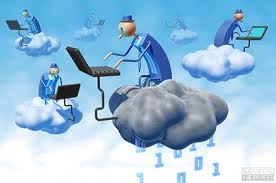
The Cloud technology is relatively the newest place to store data. The cloud technology is developing now at a rapid pace and is becoming better and better and getting more and more popular among computer users. The experts suggest that this technology will grow further and will become essential as currently the USB flash drive is. The cloud technology is quite useful for the middle-size and large scale firms, however, nothing comes up perfectly. The cloud technology has also various disadvantages and can be injurious to your data.
photo_1362418443_temp
Cloud technology is like keeping your confidential files in a locker that is situated in the office of your friend. So, the questions that arise would be; who accesses your office would be able to access the locker? How strong is the locking system of that locker? How would you know that the claims your friend is making about that locker’s security are not exaggerated? To make sure that your data remain confidential that is saved in the cloud, you must use security software that enables you to store Lock Files on the server. Your data is just a username and password away from getting breached.
These cloud servers also have some of the technical issues. There can be some situations where even the respectable companies who are offering the space to save your data on the server could not make you to access your data. This situation in the layman term is called ‘link down’.  When the server’ link is down, you just cannot enter your data until and unless that issue is resolved. All in all, the cloud technology is quite useful for the computer users. However, this technology has to be improved by leaps and bounds to get perfect. As the data security is one of the biggest issues for the computer users, that is why, the companies offering this service need to make their security measures foolproof.
For More Information Please Visit:

Thursday, 15 August 2013

Excitement over the new iPhone is building to a frenzy this week as rumors abound that Apple (AAPL) will unveil upgraded models on September 10.
That would be almost exactly a year after Apple introduced the iPhone 5, which grabbed the title of best selling smart phone model in the world last year.
Apple isn’t commenting on new models yet but the September 10 introduction date has been confirmed by major news organizations including the Wall Street Journal’s AllThingsD and dedicated Apple bloggers such as Jim Dalrymple.
The rumored new handset, expected to be called the iPhone 5S, will probably look quite similar to the current model 5 but is sure to be lighter and more powerful than ever. It may also be accompanied by a lower-priced, plastic-cased model, dubbed the iPhone “5C” on the Internet.
iPhone 5C

Pictures leaked onto the Web of the purported lower-priced iPhone show an array of bright colors instead of just the same old black and white models available in recent years. That would make 2013 a banner year for colorful phones, as the new Google (GOOG) Moto X phone arriving in stores in a few weeks is being offered in 18 colors.
A rising share price
And it's not just customers who are excited about a new iPhone. Investors have been driving up Apple's share price — even before billionaire hedge fund manager Carl Icahn tweeted this week that he had bought a large position. After lagging the market for most of the year, Apple shares have gained 17% over the past month.
Apple remains a top player at the high end of the smartphone market, especially in the United States, where most carriers subsidize more than two-thirds of the cost of a new phone for customers who sign a two-year contract.
The lower-priced phone would help Apple better compete for customers who pay month to month and those who live in less-wealthy countries where carriers don’t offer subsidies. Apple currently offers older models, such as the 2010 iPhone 4, to those customers. But the older phone still costs $450 without a subsidy and may lack the appeal of more recent models running Google’s Android software.
“They’ve been wickedly profitable but their market share is kind of plateauing,” says Ramon Llamas, mobile research manager at IDC. Apple captured 18% of the smartphone market in 2011 and 2012, according to IDC. “A little more attention to emerging markets is warranted.”
Competitors with $200 to $300 phones have been growing faster than Apple in many less-wealthy markets, according to data from Gartner. Apple sold 31.9 million phones worldwide in the second quarter, up just 10% from a year earlier, Gartner reported, second to Samsung. But Apple’s next three competitors – LG Electronics (066570.KS), Lenovo Group (0992.HK) and ZTE (0763.HK) – sold almost as many, 31.8 million combined, as their sales jumped 93%.
Still, Llamas isn’t sure a new lower-priced phone is needed. Lower pricing and greater promotions of older models could work just as well, he argues.
Could the cheap phone move backfire?
And Apple’s rumored move to offer lower-priced new iPhones could backfire. Some analysts fear that a portion of wealthy customers will forgo buying more-expensive models in favor of the “5C.” That could cut into Apple’s revenue and profits. The move could also tarnish Apple’s reputation as a leading premium phone maker, particularly if the lower-priced model is seen as chintzy or with key functions crippled.
But if Apple announces a lower-priced model, it is more likely to create a desirable, full-featured product in keeping with the company’s premium image, according to John Gruber, who has followed Apple for over a decade at his website, DaringFireball.net.
“The 5C is not about selling a piece of junk to some sort of unwashed masses,” Gruber wrote on Tuesday. “It’s about continuing to push the price down to expand the iPhone’s market without changing what the iPhone brand stands for.”
At the high end
Following a pattern Apple has established over several years, the new high-end iPhone is likely to retain the outward appearance of the current iPhone 5. Apple tends to produce a major iPhone overhaul only every other year, in keeping with the two-year contract cycle of many mobile phone subscribers. And pictures floating on the Internet show a rumored new iPhone with a similar shape and upgraded internal components to the current model.
iPhone 5S camera
But many analysts expect Apple may incorporate a brand-new feature this year – a fingerprint reader hidden in the iPhone’s tiny home button. Apple bought mobile security firm AuthenTec and its fingerprint-scanning technology last year for $356 million. And text contained in beta versions of Apple’s new iOS 7 software appears to reference a finger print sensor, too.
“It’s a great way to ease the hassle of remembering passwords,” says Ken Hyers, senior analyst at Strategy Analytics. “It will be much more reliable than the facial-recognition technology that Samsung first introduced with the Galaxy S3, and easier to use, too.”
Combined with several wireless technologies already in the iPhone, the fingerprint scanner could also be part of a new mobile-payments network from Apple. That would be quite different from Google’s Google Wallet payment system, which relies on phones that have specialized hardware, known as a Near Field Communications, or NFC, chip. U.S. mobile carriers have blocked Google Wallet apps and are planning to roll out their own NFC-based payment network known as Isis. But neither has caught on yet.
Apple’s system, relying on Bluetooth and Wifi standards, could ignore the NFC wars and build off its existing iOS app called Passbook, which currently works for items like travel and entertainment tickets. Apple mobile development chief Craig Federighi made fun of Android's NFC-based file transfer system at the company's developer conference in June. "There's no need to wander around the room bumping your phone," he said, referencing the system featured prominently in Samsung television ads.
Apple fans hoping for a bigger screen are likely to be disappointed. Android phones have featured ever larger screens – the new LG G2 model unveiled August 7 has a 5.2” screen, one of the biggest yet. Google's Moto X phone has a 4.7" screen.
But Apple is trying to avoid further fragmenting its lineup in order to make it easier for developers to write apps that will look good and run smoothly on all iOS hardware. Analysts expect Apple will stick with the 4” screen introduced on last year's iPhone 5. The screen was slightly longer than earlier models but maintained the same width, so apps that weren’t updated for the new size could just display a black bar over the extra space.
Some analysts say Apple needs to move to bigger screens to better compete against Android. That probably won't happen until the company's 2014 upgrade cycle.
“It’s just like in the movie 'Jaws' – what we need is a bigger boat,” says Roger Entner, founder of Recon Analytics. “If you’re going to charge a premium and seek to delight your customers, you have to be leading, not following, the trend.”
To keep up with all the latest tech industry news, follow Aaron Pressman on Twitter and Tumblr.
Check out more Yahoo! Finance content here on Tumblr.

New Targets for Hackers, Your Car and Your House

Posted by Tom Riddle | 03:04 Categories:
Black Hat USA 2013 attendees pass under a projected Black Hat logo during the hacker convention at Caesars Palace in Las Vegas, Nevada July 31, 2013. REUTERS/Steve Marcus (UNITED STATES - Tags: SCIENCE TECHNOLOGY MILITARY)

magine driving on the freeway at 60 miles per hour and your car suddenly screeches to a halt, causing a pileup that injures dozens of people. Now imagine you had absolutely nothing to do with the accident because your car was taken over by hackers.
Charlie Miller, a security researcher at Twitter, and Chris Valasek, director of security intelligence at IOActive, a security research company, recently demonstrated car hacks at the DefConcomputer security conferences in Las Vegas. The researchers completely disabled a driver’s ability to control a vehicle. No brakes. Distorted steering. All with a click of a button. While the demos were with hybrid cars, researchers warn that dozens of modern vehicles could be susceptible.
Hackers and security researchers are moving away from simply trying to break into — or protect — people’s e-mail accounts, stealing credit cards and other dirty digital deeds. Now they’re exploring vulnerabilities to break through the high-tech security of homes, cause car accidents or in some extreme cases, kill people who use implanted medical devices.
“Once any single computer in a car is compromised, safety of the vehicle goes out the window,” Mr. Miller said in an e-mail interview. Modern cars typically have 10 to 40 little computers in them.
“Right now, there aren’t a lot of ways for hackers to remotely attack cars: Bluetooth, wireless tire sensors, telematics units,” he added. “But as cars get Internet connections, things will get easier for the attacker.”
Carmakers and the government are aware that our vehicles are vulnerable. In fact, Mr. Miller and Mr. Valasek received a grant from the Defense Advanced Research Projects Agency, or Darpa, to research ways carmakers can thwart attacks. The biggest fear is the future: as cars become more computerized — or become fully automated, computers on wheels that drive for you — they’ll become more inviting targets.
But the demonstrations by security experts and hackers weren’t a peek at what’s to come. The researchers hacked a Toyota Prius and Ford Escape, two hybrid cars that are already on the road.

Certainly, hackable cars are a troubling development for people who don’t even like to use cruise control.
Now to add to your paranoia, security researchers warned that our homes are more vulnerable than our cars to attackers. That is, if burglars trade in their lockpicks and crowbars for laptops and Wi-Fi scanners.
Devices like the Lockitron, a Wi-Fi enabled front-door lock that can be used with a smartphone, could open a way for technically skilled thieves to break into your home. That’s not to pick on Lockitron. They just happen to be on the cutting-edge of wireless home security.
“We’ve built Lockitron from the ground up with security in mind,” the company said in a statement, while acknowledging that “anyone claiming their system is ‘unhackable’ is wrong.” At the conferences, security experts lauded the company for the protection it has built into the Lockitron.
Hackers could also turn our televisions and webcams against us, monitoring everything we’re saying and doing. Next-generation light bulbs that are connected to the Web could be tampered with. Digital refrigerators could be turned off, allowing food to spoil without your knowledge.
Some hacks could be mere practical jokes, albeit messy ones. Researchers have warned that the Bluetooth-enabled INAX Satis model toilets, which can be controlled via a smartphone app, could easily be hacked to spray water up instead of down. In response to warnings that its toilets could be hacked, INAX said it issued a security update for its toilets this month.
Yes, in the future, you will need to download security updates for your toilet.
And then, there are the usual smartphones fears. At BlackHat, Kevin McNamee, the director of Kindsight Security Labs, demonstrated how to take over an Android smartphone by injecting code through the game “Angry Birds.” Once he had control of the phone, Mr. McNamee was able to remove photos and personal data from the device without the owner having any clue.
Other researchers took over an iPhone by hacking a power adapter — yes, a little white power cord — to suck passwords and e-mails from a device that ran operating systems earlier than iOS 7.
But some of the most advanced security researchers are thinking about even scarier hacks, of implanted medical devices.
Barnaby Jack, who was perhaps best known for a hack that made an A.T.M. spit out cash, was supposed to demonstrate at Black Hat how implantable medical devices, including a pacemaker, can be hacked to kill someone. But Mr. Jack, who was in his 30s, died shortly before he was to make his presentation, of causes that have yet to be determined. He was often referred to as an “ethical hacker” and hoped to show the pacemaker exploit as a warning to device makers.
So, should we dig holes in our yards, bury our computers and smartphones and never drive our cars again? Some researchers said many of these demonstrations were provocative, but they were more theoretical than any sort of real risk we had to worry about today.
“Sometimes there is a gap between the researcher community and the real world. Researchers bridge this gap often, but it’s not uncommon to see conference talks on exotic technologies that don’t really impact our everyday lives just yet,” said Chris Rohlf, founder of Leaf Security Research, a security consulting company, in an interview. “As technology embeds itself into these everyday devices and other parts of our lives, you will see an increased focus on their security. Anywhere you find technology you’ll inevitably find hackers.”
When these technologies do arrive, I would not count on the companies that are installing computers in our cars, homes and bodies to be able to stop rogue hackers.
“We haven’t figured out how to stop attacks against Web browsers in personal computers despite trying for the last 10 years, so there isn’t any reason to think that we can stop attacks against cars or other devices in the near future,” Mr. Miller said. “We should be concerned and start taking action now before something bad happens. I’ll still be using my car and refrigerator in the meantime though.”
  • RSS
  • Delicious
  • Digg
  • Facebook
  • Twitter
  • Linkedin
  • Youtube